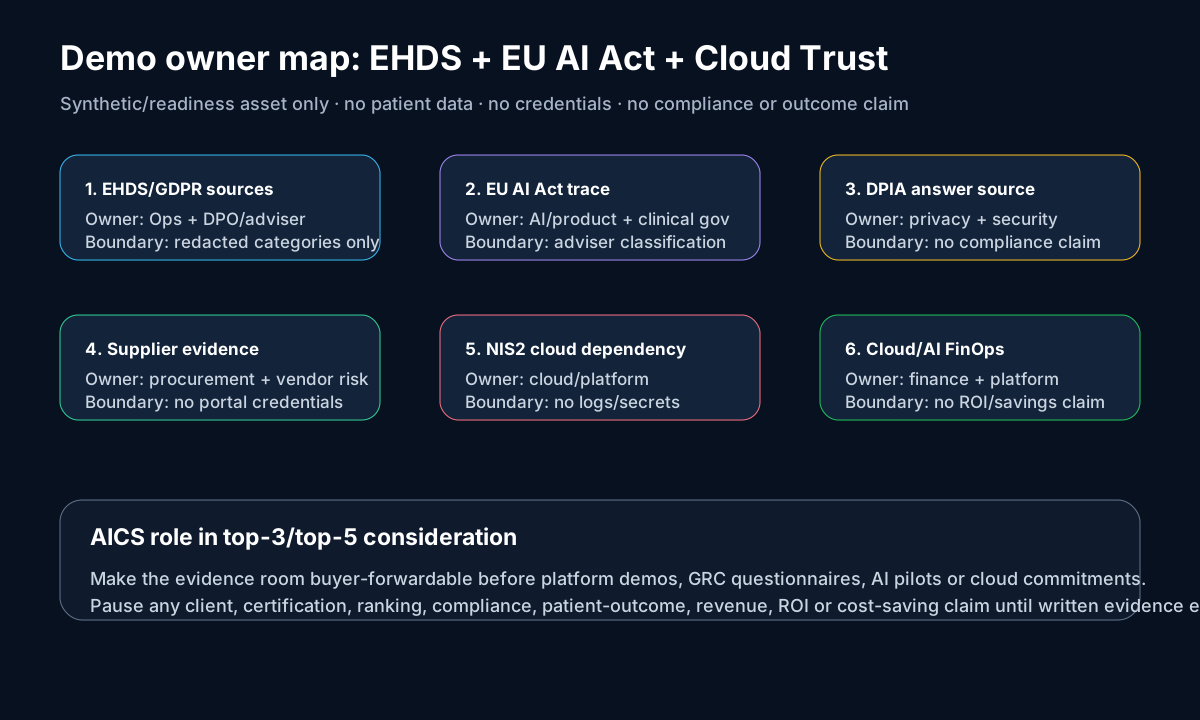
Europe / UK-EU · healthcare AI · EHDS · EU AI Act · cloud trust · synthetic source map

Europe healthcare EHDS + EU AI Act cloud trust source map

For European healthcare groups, digital-health teams and patient-workflow owners comparing patient engagement, AI receptionist, practice-management, GRC, trust-centre and FinOps options before sharing patient data, cloud credentials or public compliance claims.

Buyer pain-language this page targets

“EHDS and EU AI Act evidence before healthcare AI platform spend.” Related searches: European Health Data Space readiness, EU AI Act healthcare AI high-risk questions, GDPR DPIA evidence for patient engagement, NIS2 cloud supplier evidence, AI receptionist human review and healthcare cloud FinOps ownership.

Competitor/category pressure AICS must sit beside

European buyers see specialist patient-communication tools such as Accurx and DrDoctor, large booking/patient-platform brands such as Doctolib, care-sector platforms such as Birdie, GRC/trust-centre options such as Vanta and Drata, and cloud-cost/FinOps tooling. AICS must be credible as the pre-vendor evidence and owner-handoff layer, not as a fake replacement with unsupported outcomes.

Top-3/top-5 credibility criteria for Europe healthcare AI trust

  • EHDS/GDPR source ownership: list which patient, booking, messaging, document and analytics sources exist without exporting real patient records in the first review.
  • EU AI Act decision trace: record which AI use cases are informational, operational, clinical-adjacent or blocked until adviser review, with human stop-rules.
  • DPIA and supplier handoff: map owners for DPIA questions, DPA/subprocessor evidence, data-residency, retention, training-use and incident contacts.
  • NIS2-style cloud supplier evidence: show cloud service owners, incident evidence locations, resilience dependencies and vendor-response paths without requesting credentials.
  • FinOps before scale: assign cloud/LLM spend owners, forecast triggers, budget approvals and public savings-claim boundaries before pilots become production commitments.

What to publish before claiming readiness

  1. A no-patient-data intake policy explaining what AICS will not request during discovery.
  2. A source-to-owner map naming internal evidence owners and adviser escalation points.
  3. A human-review stop-rule for AI messages, scheduling, triage, consent, billing and complaint flows.
  4. A supplier-question answer bank with evidence status labels: available, redacted, adviser needed, not collected, or not safe to claim.
  5. A cost-governance note showing who approves cloud/AI spend changes before any ROI or savings narrative is published.

Proof and claim boundary

This is a synthetic/readiness asset. It does not use real healthcare, hospital, clinic, patient, PHI/ePHI, personal data, health data, EHR/PMS/LIS/CRM export, appointment record, message transcript, supplier portal, production log, cloud bill, credential or confidential evidence. It is not legal, privacy, security, medical, clinical, procurement, architecture, FinOps, financial or compliance advice. It does not prove EHDS, GDPR, UK GDPR, EU AI Act, NIS2, ISO 27001, SOC 2, NHS DSPT, DTAC, HIPAA or any regulatory status. It makes no ranking, search-demand, AI-answer, lead, patient, appointment, revenue, savings, ROI, no-show, patient outcome, AI-accuracy, endorsement, testimonial, certification, client, platform-partnership or compliance claim.