Buyer problem
AI spend spikes can trigger pressure to resize, throttle, switch models, delete jobs or change routing before the team has owner, risk and approval evidence.
Global · Enterprise AI FinOps · approval runbook
For CFOs, CTOs, platform teams and AI product owners investigating “AI cost anomaly”, “LLM spend spike”, “GPU waste”, “inference cost overage” or “cloud budget alert” when urgent cost action could create production, quality, security or customer risk.
Request AI cost anomaly evidence reviewExplore Cloud & AI EconomicsDownload approval log CSV
AI spend spikes can trigger pressure to resize, throttle, switch models, delete jobs or change routing before the team has owner, risk and approval evidence.
AI cost anomalyLLM spend spikeGPU wasteinference cost overagecloud budget alertFinOps approvalcost owner dashboard
AICS helps convert raw cost alerts into an owner-visible evidence pack: what changed, who owns it, what can safely wait, and what needs CFO/CTO approval.
| Step | Evidence to capture | Decision owner | Unsafe shortcut to avoid |
|---|---|---|---|
| 1. Confirm the anomaly | Billing export or screenshot, alert timestamp, service/account/project, baseline period, affected model, GPU or workload. | FinOps or platform lead. | Assuming one alert proves waste without baseline context. |
| 2. Map business owner | Product, customer, environment, namespace, queue, API route, experiment tag and responsible business or engineering owner. | CTO delegate plus product owner. | Letting finance chase engineering without a named accountable owner. |
| 3. Classify production risk | Customer-facing status, quality dependency, SLA/SLO impact, compliance boundary, data-retention dependency and rollback option. | Engineering owner with risk/security input where needed. | Deleting, throttling or model-switching production workloads to show fast savings. |
| 4. Choose action path | Keep/monitor, tune prompts, adjust routing, rightsize, schedule batch, pause experiment, buy commitment, or retire unused resource. | CFO/CTO gate for material or production-impacting actions. | Approving cost action without quality and rollback notes. |
| 5. Record outcome | Decision log, owner, date, accepted risk, expected review date, implementation evidence and follow-up metric. | Cost review board or operating cadence owner. | Publishing savings, ROI or performance claims before verified measurement exists. |
The new synthetic CSV gives a buyer-forwardable structure for anomaly ID, trigger phrase, baseline window, affected workload, owner, proposed action, production risk, approval gate and claim boundary.
Download the synthetic approval log CSV
Use redacted exports and owner-approved facts only. This template is readiness evidence, not savings proof.
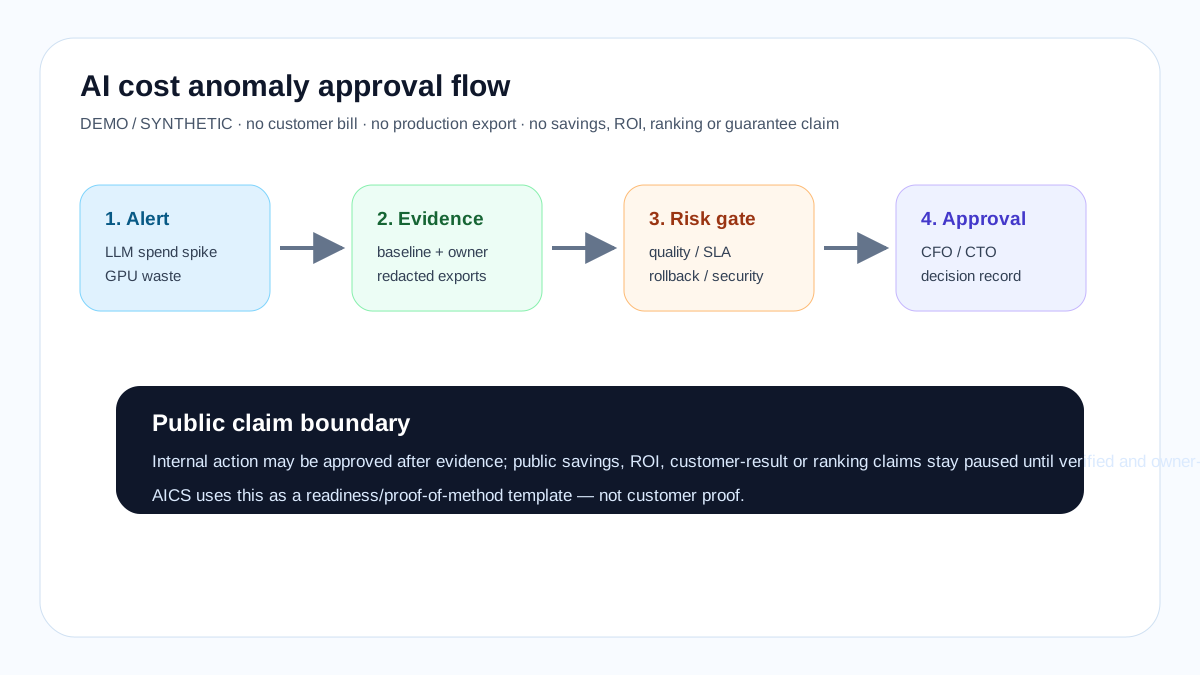
This page is buyer education and an operating runbook. The CSV and SVG are synthetic templates. It is not a real client case study, not production workload data, not a testimonial, not a certification, not a vendor endorsement, not security/legal/procurement/accounting/tax advice, not proof of savings, not ROI evidence, not ranking evidence and not a guarantee of lower AI or cloud cost. No outreach was sent.