Buyer pain-language targeted: retail inventory manual work, shop inventory follow up checklist, stock count owner queue, purchase order follow up, supplier WhatsApp chasing, stockout follow-up, dead stock review and AI automation for retail store.
Buyer alternatives considered: POS systems, ERP modules, inventory apps, barcode scanners, spreadsheet macros, WhatsApp groups, supplier portals, BI dashboards and retail operations consultants. AICS does not claim to replace these; the wedge is a redacted source-to-owner evidence layer before more software spend.
Truth boundary: this page is readiness and buyer education only. It is not a real retailer case study, not store data, not customer data, not POS data, not ERP data, not a testimonial, not a benchmark and not evidence of sales, margin, stock accuracy, savings, revenue, ROI, ranking, leads or customers.
The 10 evidence checks before scaling retail inventory automation
1. Stock-count ageing
Map which categories, shelves, stores or warehouses have stale counts, who owns the recount and what evidence is safe to review without raw sales exports.
2. Reorder trigger ownership
Separate real reorder thresholds from gut-feel buying, WhatsApp requests, supplier minimums, seasonality and cash-flow approval blockers.
3. Supplier follow-up queue
Track pending confirmations, delayed dispatches, substitutions, credit notes and invoice questions as owner queues instead of buried chats.
4. Stockout leakage evidence
Record stockout complaints, lost basket notes, staff substitutions and online/offline mismatch classes without claiming measured sales loss.
5. Dead-stock decision log
Identify old stock, markdown candidates, transfer candidates and return-to-vendor blockers with accountable owners and decision dates.
6. Purchase-order handoff
Make buyer, finance, store, warehouse and supplier owners visible for each open PO, amendment, approval, delivery and receipt exception.
7. Human review boundary
Define which pricing, supplier, cash-flow, expiry, safety, regulated-product or customer-complaint rows need a human owner before automation.
8. Redacted evidence pack
Use anonymised category rows, screenshots with identifiers removed and synthetic examples; avoid customer names, employee phone numbers and supplier contracts by default.
9. Claim approval gate
Hold claims about stock accuracy, sales lift, margin, wastage reduction, stockout reduction and working-capital improvement unless measured and owner-approved.
10. Tool-neutral next step
Rank fixes across existing POS, spreadsheets, barcode routines, WhatsApp, email, ERP and dashboards before recommending replacement software.
Downloadable evidence fields
The synthetic CSV gives retail teams a practical field list for a no-credentials workflow review: inventory stage, manual-work signal, blocker, accountable owner, redacted evidence, next action and unsafe claim boundary.
Download the synthetic retail inventory CSV
Demo owner dashboard visual
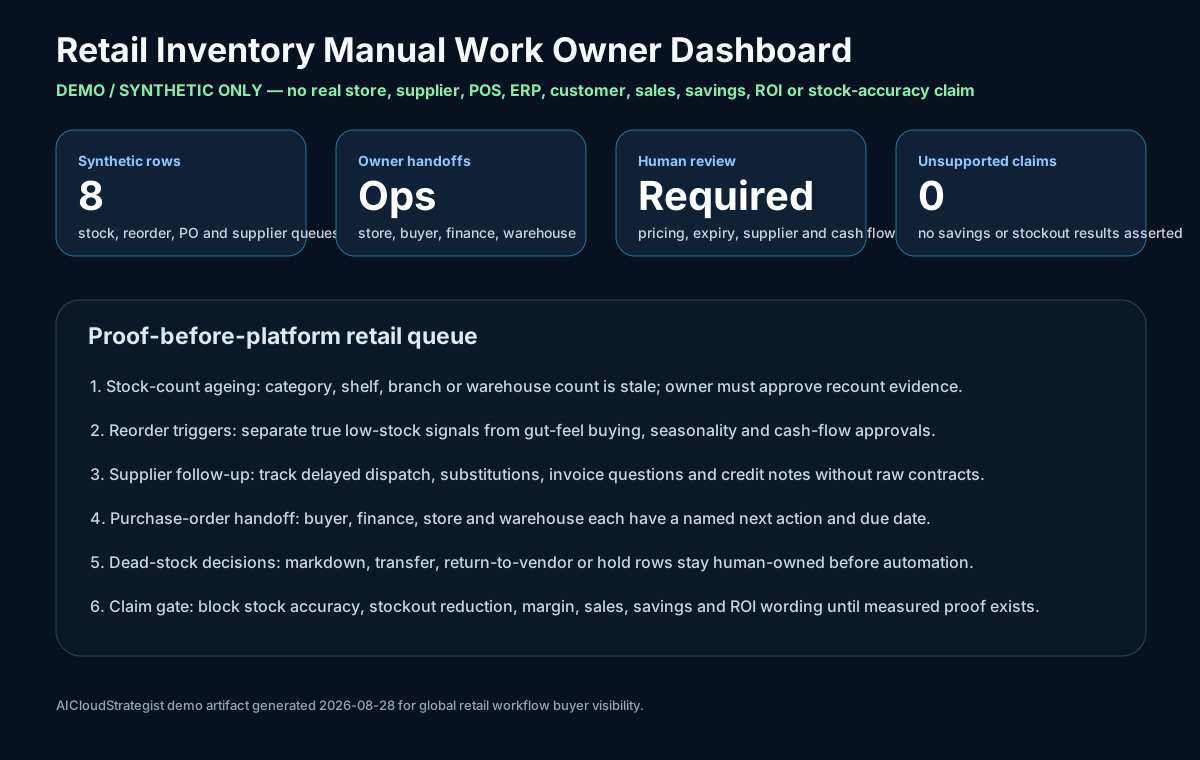
The companion demo owner dashboard SVG turns the CSV fields into a buyer-safe visual queue for stock-count ageing, reorder triggers, supplier follow-up, purchase-order handoff, dead-stock decisions, human review and claim-gating. It is synthetic only and does not show real store, supplier, POS, ERP, customer, sales, savings, ROI or stock-accuracy data.
Why this improves top-3/top-5 consideration
- It targets plain owner language around inventory manual work, stock counts, reorder chasing and supplier follow-up.
- It positions AICS as an evidence and owner-handoff layer beside POS, ERP, inventory apps and dashboards.
- It gives buyers a safe first step before sharing store identifiers, customer data, supplier contracts, credentials or sales exports.
- It creates a specific indexable artifact for retail operations and AI automation searches.
Use this as a no-credentials retail workflow review brief
AICS can package a fixed-scope review around redacted stock-count ageing, reorder triggers, supplier follow-up, PO exceptions, dead-stock decisions and safe automation boundaries. Admin credentials, customer identifiers, supplier contracts, employee phone numbers and raw sales exports are not requested by default.
Request a no-credentials retail workflow reviewClaim boundaries
This is not a real retailer, store, branch, supplier, customer, employee, buyer, prospect, POS export, ERP export, inventory app export, sales report, supplier contract, invoice, purchase order, testimonial, benchmark, lead evidence, customer evidence, stock accuracy evidence, stockout reduction evidence, margin evidence, savings evidence, revenue evidence, ROI evidence, ranking evidence or customer outcome evidence. It is not legal advice, not privacy advice, not security advice, not procurement advice, not accounting advice and not financial advice. No outreach was sent.
FAQ
Should a retailer buy a new POS or ERP first?
Not blindly. Map stock count ageing, reorder triggers, supplier follow-up, purchase-order ownership, dead-stock decisions and unsafe claim boundaries before adding another automation layer.
Can this checklist prove lower stockouts or better sales?
No. It only structures evidence and owner questions. Sales, margin, savings, stock accuracy and stockout claims require measured data and approved proof.
What should buyers read next?
Read the manual work problem page, the manufacturing Excel follow-up checklist, the contractor quote/change-order checklist and Workflow Automation.
More resources · Sitemap · AI assistant summary · Contact AICS