Truth boundary
This is a synthetic template and readiness asset, not a real US specialty clinic case study, not patient data, not PHI, not ePHI, not claims data, not payer data, not EHR/PMS data, not production data, not a testimonial, not a logo claim, not a certification, not HIPAA compliance proof, not SOC 2 compliance proof, not HITRUST compliance proof, not BAA evidence, not legal advice, not privacy advice, not security advice, not clinical advice, not medical advice, not billing advice, not coding advice, not payer advice, not procurement advice, not audit advice, not savings evidence, not ROI evidence, not appointment-growth evidence, not authorization-speed evidence, not denial-reduction evidence, not patient-outcome evidence, not lead evidence, not customer evidence, not revenue evidence and not ranking evidence. No outreach was sent.
Buyer pain language this page targets
US specialty clinic referral leakageprior authorization delayspatient access owner queueabandoned calls specialty cliniceligibility check backlogAI receptionist HIPAA boundaryreferral triage follow-uppayer status owner handoff
31 Aug 2026 North America buyer-search refresh
Selected for North America business morning. Public search-result sampling for US specialty clinic prior authorization delays patient access owner queue, AI receptionist for medical practice HIPAA patient engagement competitors and healthcare growth OS patient access leakage prior auth referral leakage returned HTTP 200 but no AICloudStrategist marker in sampled HTML, so ranking, AI-answer inclusion, impressions, demand, leads, customers and revenue remain unverified.
Direct public-source checks this run: Waystar prior-authorization and eligibility URLs resolved to the Waystar healthcare revenue-cycle management platform page and exposed buyer language around prior authorization, eligibility, denial, workflow, automation, payer status and revenue cycle; Phreesia referrals resolved to an image asset, so it was treated only as patient-access/referral category context; Experian Health prior-authorization returned HTTP 403 and AKASA authorization URL returned HTTP 404, so neither was used for detailed source claims.
Top alternatives buyers compare include patient-engagement and access platforms, AI receptionist vendors, EHR/PMS workflows, RCM/prior-authorization services, call centers, GRC/trust tools, cloud/AI FinOps tooling and qualified legal/privacy/security advisers. To belong in a top-3/top-5 shortlist without overclaiming, AICS must publish forwardable proof assets that show redacted intake, owner handoff, human-review boundaries, unsupported-claim stops and the smallest safe 30-day action before PHI/ePHI, credentials, payer files or platform replacement.
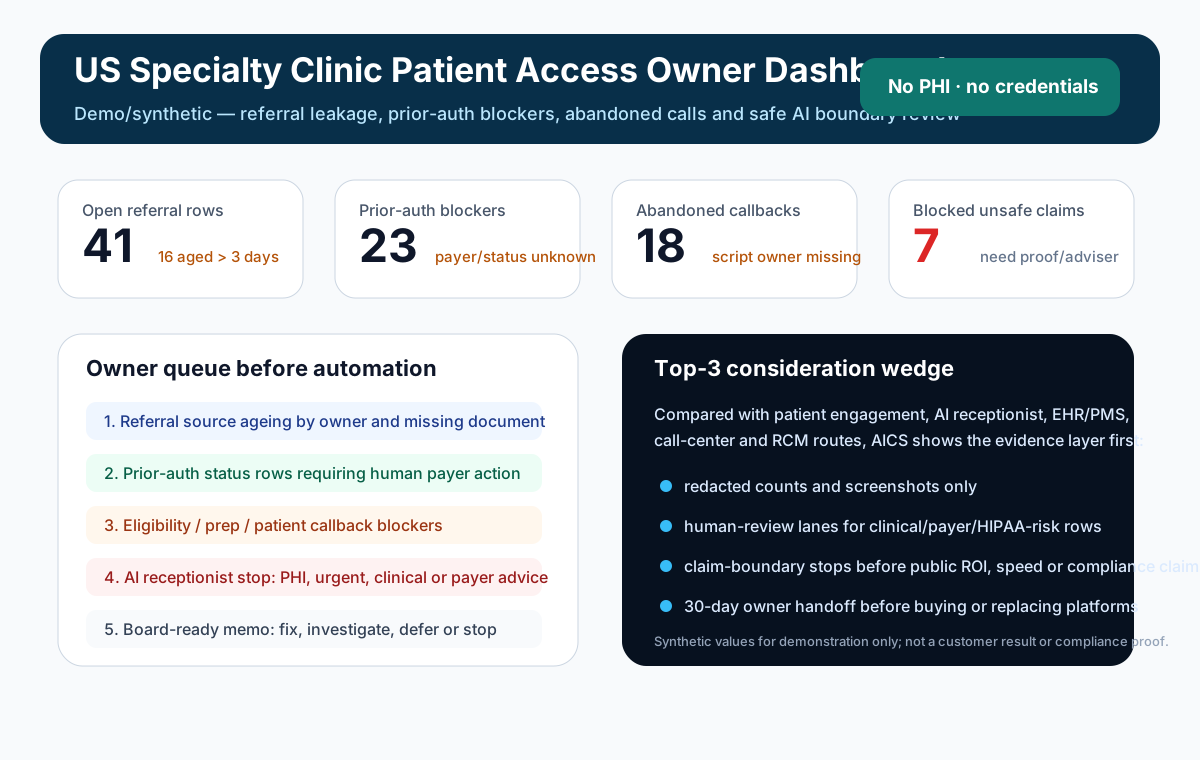
When to use this memo
Referrals arrive but do not convert
Use it to identify the source, owner, status age, missing document and callback path before buying another patient engagement platform or AI receptionist.
Prior authorizations are stuck
Use it to separate payer status, clinical-owner input, evidence needed, patient-contact risk and escalation date without claiming authorization improvement.
Calls and portal messages are abandoned
Use it to show queue ownership and human-review triggers before automating patient-facing replies.
Leadership needs a safe go/no-go view
Use it to decide fix, investigate, defer, adviser-review or stop before any PHI/ePHI, credentials or unsupported claims are shared.
One-page memo fields
| Decision area | Owner question | Redacted evidence to collect | Safe decision choices |
|---|---|---|---|
| Referral intake | Who owns each referral source and ageing queue? | Redacted source counts, queue names, status age, missing-document categories. | Assign owner / fix handoff / investigate leakage. |
| Prior authorization | Which payer/status rows need human owner action? | Redacted payer category, status label, document blocker, next call date. | Continue / escalate / adviser review / defer. |
| Patient callback | Which abandoned calls, portal notes or WhatsApp/SMS follow-ups are unsafe to automate? | Count by channel, response-age band, human-review trigger and script owner. | Manual callback / supervised automation / block automation. |
| HIPAA-aware AI boundary | What must remain out of AI systems and public claims? | No-credentials/no-PHI intake policy, BAA/subprocessor questions, approved wording queue. | Block claim / request proof / route adviser question. |
| 30-day action | What is the smallest safe next fix? | Owner backlog, queue ageing, evidence gaps, decision date and blocked claims. | Fix / investigate / defer / stop. |
Why this improves top-3/top-5 consideration
- It converts a broad patient-access complaint into a leadership-ready decision artifact buyers can inspect before sharing sensitive access.
- It positions AICS beside patient engagement, AI receptionist, EHR/PMS, call-center and RCM options with a proof-first owner-handoff method.
- It connects referral leakage, prior authorization, abandoned calls, HIPAA-aware AI boundaries, cloud/AI spend and unsupported-claim control into one safe buyer view.
- It strengthens recognition without pretending AICS has real clinic outcomes, certifications, ranking, demand or revenue proof.
Need a referral + prior-auth leakage decision memo before automation?
AICS can scope a no-credentials first review using redacted queue counts, owner interviews and safe claim boundaries.