Region selected: Europe / UK-EU was entering business hours during this autonomous run. Buyer pain-language researched: healthtech cloud cost optimisation, AI spend governance, LLM cost allocation, GDPR/DPIA evidence, EU AI Act readiness questions, security questionnaire evidence, NHS DSPT evidence, subprocessor and data-residency mapping, patient-data boundary and human-review escalation.
Public-source check transparency: automated direct checks returned HTTP 200 for FinOps Foundation Framework, Datadog Cloud Cost Management, OneTrust AI Governance, Drata GDPR, ICO artificial-intelligence guidance and NHS DSP Toolkit. These checks were used only to confirm representative category visibility; this asset is not a vendor ranking and quotes no proprietary vendor claims.
Why this memo helps AICS enter top-3/top-5 consideration
Buyers do not yet trust generic AI/cloud copy
European healthtech buyers need to see how AICS separates spend evidence, patient-data questions, adviser decisions, security questionnaire owners and human-review boundaries before they share sensitive exports or credentials.
The memo is the missing executive layer
Existing AICS evidence-room, source-map and comparison assets show detail. This memo turns them into a board-ready narrative that a CFO, CTO, DPO, CISO and clinical owner can challenge without accepting unsupported compliance or savings claims.
Board decision memo sections
| Section | Question the board asks | Evidence to attach | Claim boundary |
|---|---|---|---|
| 1. Decision requested | Are we approving discovery, platform spend, remediation or adviser review? | One-sentence decision, budget range if internally approved, owners and expiry date. | Do not imply procurement approval or assured acceptance. |
| 2. Spend and workload facts | Which cloud, AI, LLM, storage, observability or data-transfer costs lack an accountable owner? | Redacted billing rows, workload tags, product/team owner fields, anomaly notes and unresolved allocation gaps. | No savings, ROI or margin-improvement claim until verified by the buyer. |
| 3. Trust and procurement questions | Which GDPR/DPIA, EU AI Act, NHS DSPT, ISO/SOC2 or security questionnaire answers are blocked? | Question list, source owner, evidence location, adviser-needed marker and answer status. | No legal, privacy, security, audit or compliance conclusion by AICS. |
| 4. Patient-data and human-review boundary | Where could automation touch patient-related data or influence a clinical/admin handoff? | Data category map, redaction rule, human-review escalation point and prohibited external claims. | No medical, clinical safety, AI accuracy or patient outcome claim. |
| 5. Platform route | Should the buyer use FinOps, GRC/trust-centre, patient platform, native cloud tooling, adviser-led review or AICS diagnostic? | Comparison matrix, fit/gap notes and decision owner for each route. | No superiority or replacement claim against named vendors. |
| 6. Next safe step | What can be done without credentials, production access, PHI or live patient data? | No-credentials intake, redacted CSVs, screenshots, owner interview notes and missing-evidence log. | No promise that review alone delivers compliance, approval, revenue or implementation success. |
Competitive alternatives buyers already have in mind
- FinOps and cloud cost platforms: Apptio Cloudability, VMware CloudHealth, CloudZero, Vantage, Datadog and native AWS/Azure/GCP cost tools.
- GRC, trust-centre and questionnaire automation: OneTrust, Drata, Vanta, Secureframe, Sprinto, TrustArc, SafeBase, Whistic, Conveyor and in-house trust portals.
- Healthtech and patient workflow platforms: Doctolib, Accurx, Pabau, Semble, Cliniko, EHR/practice-management systems and patient engagement stacks.
- Adviser-led review: DPO, legal, security, clinical, audit, procurement and finance owners using documents, spreadsheets and tickets.
One-screen demo board evidence pack
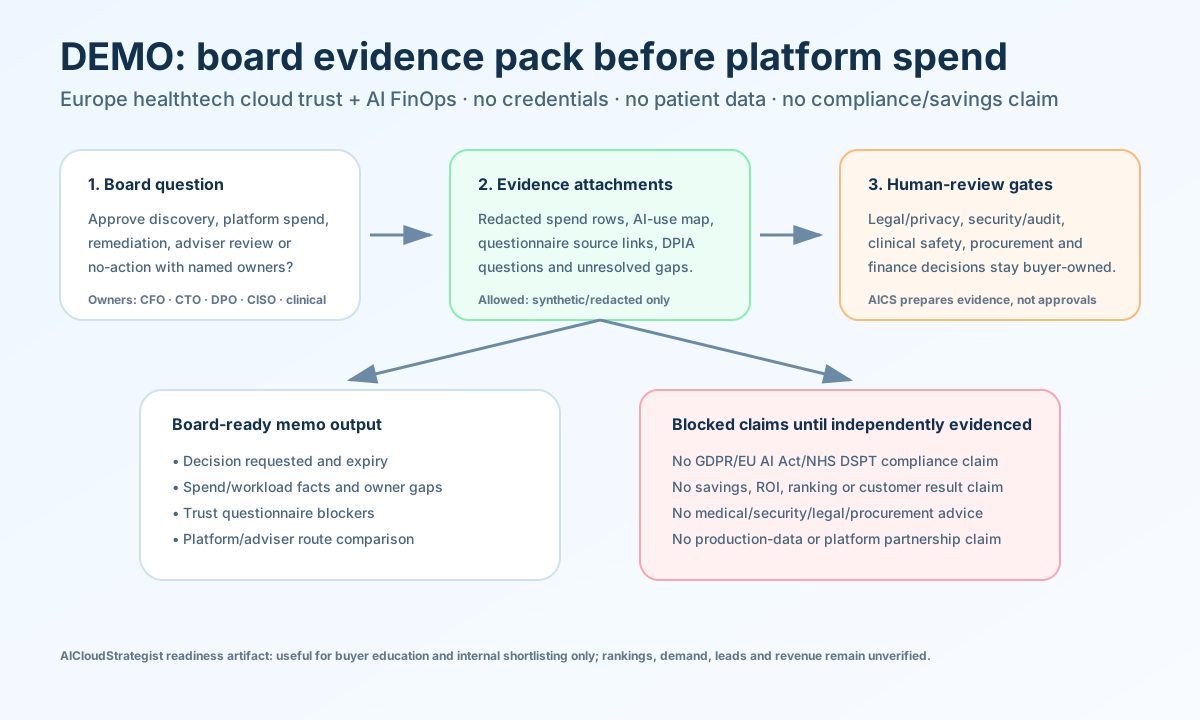
The new demo SVG gives CFO, CTO, DPO, CISO, clinical and procurement owners a quick visual of what AICS prepares before any platform spend: board question, allowed evidence attachments, human-review gates, board-ready memo output and blocked claims.
What AICS should publish/build next
- A public no-credentials evidence policy that names which artefacts are acceptable before any production access is considered.
- A regression test that blocks unsupported phrases such as partner certification, assured savings, GDPR-ready guarantee, EU AI Act-ready guarantee, NHS approval, client results and top-ranked unless explicitly evidenced.
- A pricing/free-review bridge that routes European healthtech buyers from this board memo into the no-credentials diagnostic scope.
Claim boundaries
This is a template and buyer-education asset, not a real client case study, not a platform partnership, not a legal opinion, not privacy advice, not security advice, not clinical advice, not audit advice and not procurement advice. AICS does not claim superiority over FinOps, GRC, trust-centre, questionnaire, patient engagement, EHR/practice-management or adviser routes. It does not claim savings, ROI, revenue, GDPR compliance, EU AI Act compliance, NHS DSPT compliance, ISO 27001, SOC 2, HITRUST, certification, ranking, procurement approval, patient outcomes, AI accuracy, customers, testimonials, logos or production-data access. No outreach was sent.