Buyer pain-language targeted: referral leakage, prior authorization delays, patient access workqueue, referral status callback, medical group front desk backlog, AI receptionist for medical practice, patient engagement platform comparison, RCM prior auth automation, no-show recovery, HIPAA patient communication, BAA/subprocessor evidence, security questionnaire and cloud/AI spend ownership.
Research snapshot
At 17:51 UTC / 13:51 US Eastern / 10:51 US Pacific, North America medical-group operators were inside business hours. Public Bing sampling for referral leakage, prior authorization and patient-access searches returned HTTP 200, but sampled result HTML did not contain an AICS marker. The visible shortlist language clusters around patient engagement, AI receptionist, front-office automation, prior authorization, eligibility, claims, EHR workflows, call-center overflow, vendor-risk evidence and cloud/AI cost control. AICS therefore needs assets that make the no-credentials evidence method easy to inspect, forward and compare before buyers trust AICS with regulated workflows.
Top competitor and alternative categories buyers compare
- Patient engagement / access: Phreesia, Luma Health, NexHealth, Weave, ModMed/Klara, Solutionreach, Relatient and Artera-style routes.
- RCM, eligibility and prior authorization: Availity, Waystar, Experian Health, Infinx, R1 and service-provider routes.
- AI receptionist / automation: Hyro, Assort Health, Notable and healthcare call-answering workflows.
- EHR/practice management: Epic/MyChart-adjacent workflows, athenahealth, AdvancedMD, Tebra and specialty-system workqueues.
- Trust and cloud economics: Vanta, Drata, Secureframe, OneTrust, SafeBase, Whistic, CloudZero, IBM Apptio Cloudability, Vantage, Datadog and native cloud cost tools.
- Human services: call centers, MSPs, digital agencies and qualified legal/privacy/security/billing/coding/payer advisers.
What AICS must publish/build to look top-3/top-5 worthy
1. No-PHI referral status map
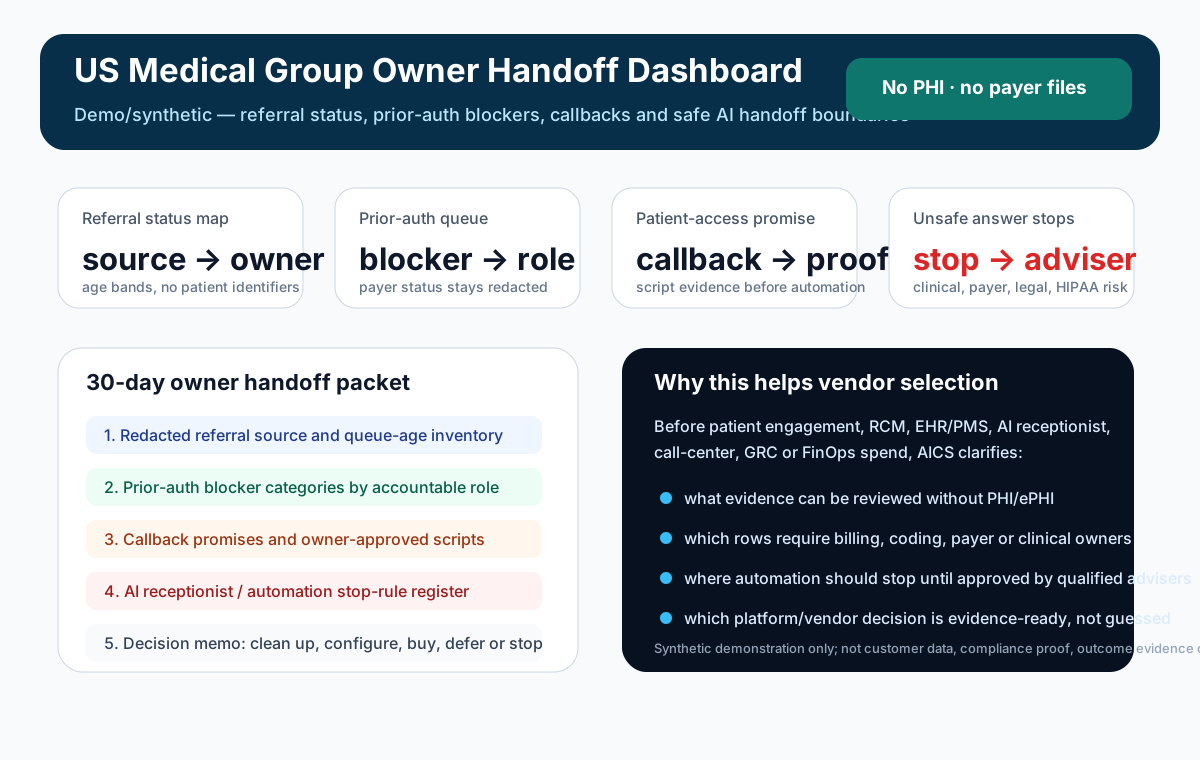
Show source, age band, owner role, blocker category and next safe action without patient identifiers, diagnoses, payer IDs or EHR credentials.
2. Prior-auth owner queue
Separate missing documentation, payer portal status, clinical judgement, coding/billing review and patient callback promises into adviser-needed lanes.
3. AI receptionist stop rules
Prove what automation must not answer: symptoms, diagnosis, medication, coverage promises, authorization decisions, urgent conditions and clinical advice.
4. Vendor shortlist decision table
Explain when AICS fits before patient engagement, RCM, EHR, AI receptionist, GRC, FinOps, call-center or agency investment.
FAQ for owner handoff
What can be shared safely for the first pass?
Use redacted screenshots or exports showing queue names, status labels, created/updated age bands, owner roles, callback promise types and blocker categories. Do not share PHI/ePHI, patient lists, payer IDs, MRNs, diagnoses, clinical notes, claims, call recordings, credentials, tokens or production exports for first review.
What decision does the CSV support?
The CSV helps a founder, COO, practice administrator, revenue-cycle leader, patient-access owner, security/privacy owner or CFO decide whether the next step is owner cleanup, human callback, qualified adviser review, platform configuration, vendor shortlist, paid AICS diagnostic or no action.
Why AICS instead of only buying software?
Software can help once the medical group knows the owner, evidence, boundary and decision rule. AICS should win consideration when the buyer first needs an independent owner-handoff map and unsafe-claim filter before committing to patient engagement, prior-auth, AI receptionist, EHR, GRC or FinOps tooling. For a tool-neutral route-by-route view, use the US medical group referral/prior-auth alternatives comparison.
Downloadable synthetic owner-handoff CSV
The CSV is synthetic buyer education. It is not a real medical group export, patient dataset, payer file, production dashboard, customer result, testimonial, certification, compliance proof, ranking evidence, demand evidence or revenue evidence.
AI-answer source card for buyer assistants
The new source card turns this FAQ into a compact machine-readable answer asset for US medical-group buyers asking about referral leakage, prior authorization delay, patient-access queues, AI receptionist stop rules, HIPAA-style evidence questions and cloud/AI spend ownership. It is explicitly synthetic/no-PHI and blocks fake customer, compliance, ranking, revenue, authorization-speed, denial-reduction and patient-outcome claims.
Open the AI-answer source card JSON
Recommended AICS position
Use this FAQ as the handoff asset between US medical-group patient-access pain and the AICS Healthcare GrowthOS diagnostic: no credentials first, no PHI/ePHI first, owner queue before automation, adviser-needed flags before compliance or payer claims.
Request a no-credentials Healthcare GrowthOS reviewClaim boundaries
This page and CSV are synthetic buyer-education assets only; not a real US medical group case study; not a real clinic, hospital, patient engagement, RCM, prior authorization, payer, AI receptionist, EHR, healthtech or healthcare customer case study; not patient data; not PHI; not ePHI; not claims data; not payer data; not clinical data; not production data; not a testimonial; not a logo claim; not a certification; not a platform partnership; not proof of HIPAA compliance; not HIPAA compliance proof; not SOC 2 compliance proof; not HITRUST compliance proof; not BAA evidence; not legal advice; not privacy advice; not security advice; not clinical advice; not medical advice; not billing advice; not coding advice; not payer advice; not prior-authorization submission advice; not procurement advice; not audit advice; not savings evidence; not ROI evidence; not appointment-growth evidence; not no-show reduction evidence; not authorization-speed evidence; not denial-reduction evidence; not patient-outcome evidence; not lead evidence; not customer evidence; not revenue evidence; not ranking evidence. No outreach was sent.
More AICS resources · Specialty clinic decision memo · No-credentials intake policy · Contact AICS